


By Debbie Sagorin, REALTOR® - Coldwell Banker Realty, Newport Beach
California DRE License #01411020 | ABR®, CNE, e-PRO®, Smart Home Certified | RealTrends Verified (2026)
22+ years in Orange County real estate | 400+ closed transactions (250+ in Irvine) | Top 1% of Irvine listing agents, 10th of 1,792. 9,237th in the US by sales volume, RealTrends Verified 2026.
12-time Five Star Real Estate Agent Award | a 4.9 rating from 293 verified client reviews on Zillow
Published: July 28, 2025 | Last updated: June 15, 2026
Quick Answer
In June 2026, the U.S. housing market is split: the Northeast and Midwest are still seller's markets with tight inventory, while the South and West - including Orange County and Irvine - are leaning buyer-friendly with rising inventory and softening prices. Within Irvine, the picture varies by village: Woodbridge and Turtle Rock are closer to balanced, Portola Springs and Great Park lean buyer, while pockets of Northwood and University Park (especially no-HOA tracts) still trade like seller's markets. The honest answer to "is it a buyer's or seller's market?" requires a ZIP-code-level (and often village-level) read of the last 30 to 60 days of comps.
Depending on where you live, the housing market might feel hot and competitive ... or unusually quiet. That's because real estate isn't one-size-fits-all anymore. Some areas are shifting into buyer-friendly territory, while others are still strong seller's markets.
So if you're wondering which one you're in, the answer really comes down to local conditions. Let's take a closer look at what's driving this divide, and why understanding your specific market is more important than ever.
What's the Difference Between a Buyer's Market and a Seller's Market?
In a buyer's market, there are more homes for sale than there are buyers. That creates more choices and more negotiating power for buyers. Homes tend to sit a little longer, and prices often adjust to reflect the slower pace.
In a seller's market, it's the opposite: Fewer homes and more buyers competing for them. That usually leads to faster sales, multiple offers, and rising prices.
Right now, we're seeing both of these scenarios play out depending on the OC. The big question is: what kind of market are you in? That's where a local OC real estate expert (like me!) can give you a clear answer.
Buyer vs. Seller Activity by Region
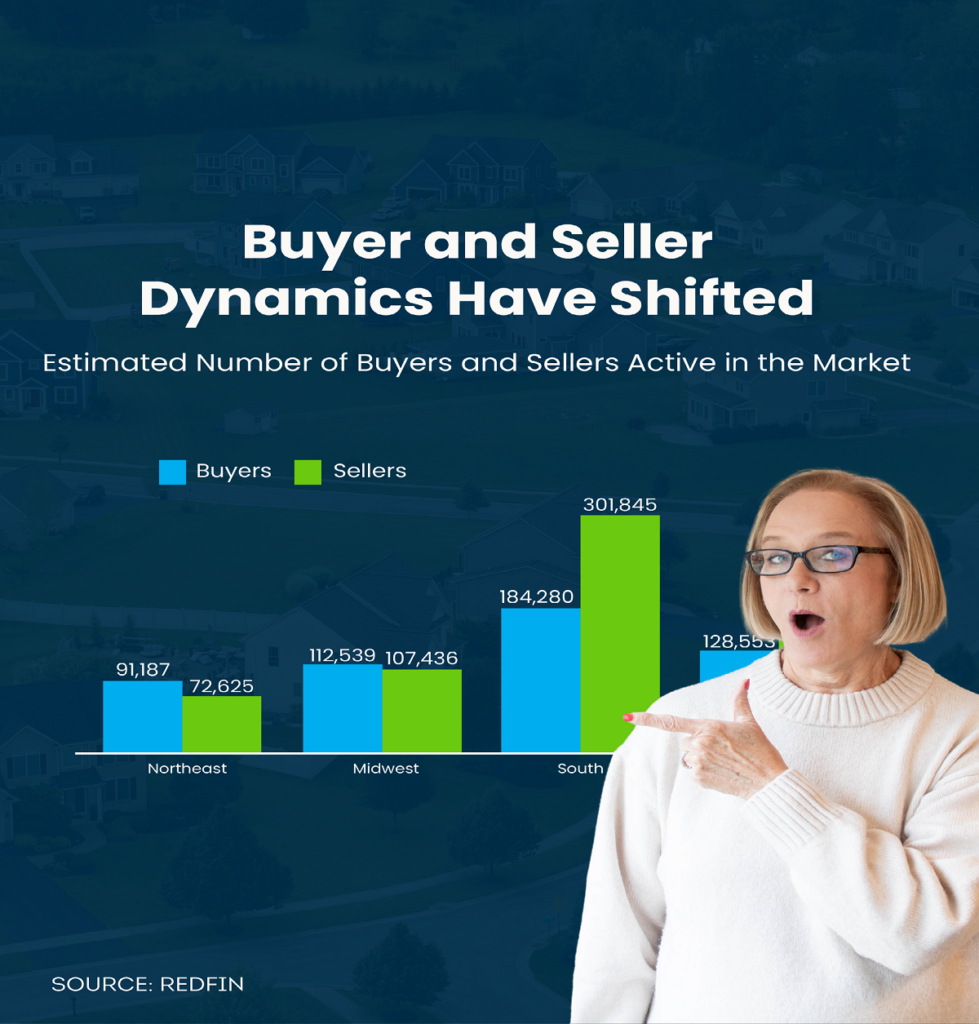
One major factor shaping the market is the balance of active buyers and sellers. According to the latest Redfin data:
📍 The Northeast and Midwest are leaning toward seller's markets. There are still more buyers than listings, which means homes are selling quickly and prices are climbing.
📍 The South and West, (where we are!), are leaning toward buyer's markets. There's more inventory and fewer active buyers, giving buyers the upper hand and creating opportunities to negotiate.
That's a big shift from a couple of years ago, when sellers held most of the power almost everywhere. Today, local trends vary a lot, from one city to the next, and even from one area / village in that city, to the next.
Home Price Trends Are Reflecting the Shift
As the buyer/seller balance shifts, so do prices.
In areas where demand still outpaces supply, especially parts of the Northeast and Midwest, home prices are continuing to rise.
But in areas like Orange County where inventory is up and buyer demand has slowed, including much of the South and West, prices are softening. That can be good news for buyers looking to make a move and potentially negotiate better terms.
Recent data from ResiClub shows that about half of the top 50 metros are seeing price increases, while the other half are either flat or declining. It's a real mixed bag.
If you're a homeowner in a market where prices are adjusting, don't worry ... chances are, you've built up plenty of equity over the past few years. Most sellers are still coming out ahead, even with slight shifts.
Why Local Expertise Is a Must Right Now
Even in regions that lean buyer-friendly, like we're becoming, there are always local pockets that tell a different story. Some neighborhoods are still competitive with low inventory and strong pricing, while others are seeing slower movement.
That's why it's critical to have someone who understands your specific area, down to the ZIP code and even deeper, and can guide you accordingly. A local agent can help you:
- Know if your area favors buyers or sellers
- Price your home right or craft a smart offer
- Navigate timing and strategy based on today's local trends
So, What Should You Do?
This isn't a one-size-fits-all housing market. Some buyers are gaining ground, while sellers still have the edge in other spots, and Irvine has its own story to tell.
If you're thinking about buying or selling in Irvine or anywhere in Orange County, let's talk. I'll help you understand exactly what's happening where you are so you can plan your next move with confidence.