

By Debbie Sagorin, REALTOR® - Coldwell Banker Realty, Newport Beach
California DRE #01411020 | ABR®, CNE, e-PRO®, Smart Home Certified | RealTrends Verified (2026)
22+ years serving Orange County | 350+ closed transactions (250+ in Irvine) | Top 1% of Irvine agents | 12-time Five Star Real Estate Agent | 285+ verified reviews
840 Newport Center Drive #100, Newport Beach, CA 92660 | +1-949-537-2079 | [email protected]
From 22 Years of Closing Irvine Deals
I have helped Irvine buyers close at sub-3 percent during the pandemic, at 7.8 percent in late 2023, and at every rate point in between. The pattern I see over and over: buyers who stretched their budget at very low rates regret it more than buyers who locked at 6.5 percent and refinanced two years later. Payment comfort beats rate timing in almost every case.
My advice to most Irvine buyers in late 2025 and into 2026: pick the home and the payment first, then lock when you have an accepted offer. Trying to time the bottom of the rate cycle while inventory in Woodbridge, Turtle Rock, and Portola Springs is this tight is how good buyers end up empty-handed.
Quick Answer
Lock now if you are closing within 30 to 60 days, today's payment fits your budget, or you are buying in a competitive Irvine submarket. Wait or float only if your timeline is six to twelve months out and you can absorb the risk of rates staying flat or rising. Consider a float-down lock if you want protection from rate increases while keeping limited upside if rates fall before closing.
December 2025 30-year fixed rates are running in the low-to-mid 6 percent range, and most 2026 forecasts point to modest moves, not sharp declines.
Buyers across Irvine and Orange County are asking the same question right now:
Is it better to lock in a mortgage rate today or wait for potential decreases?
With mortgage rates stabilizing after several volatile years, the decision in December 2025 is less about timing the market and more about managing risk, affordability, and local market conditions.
Current Mortgage Rates in December 2025
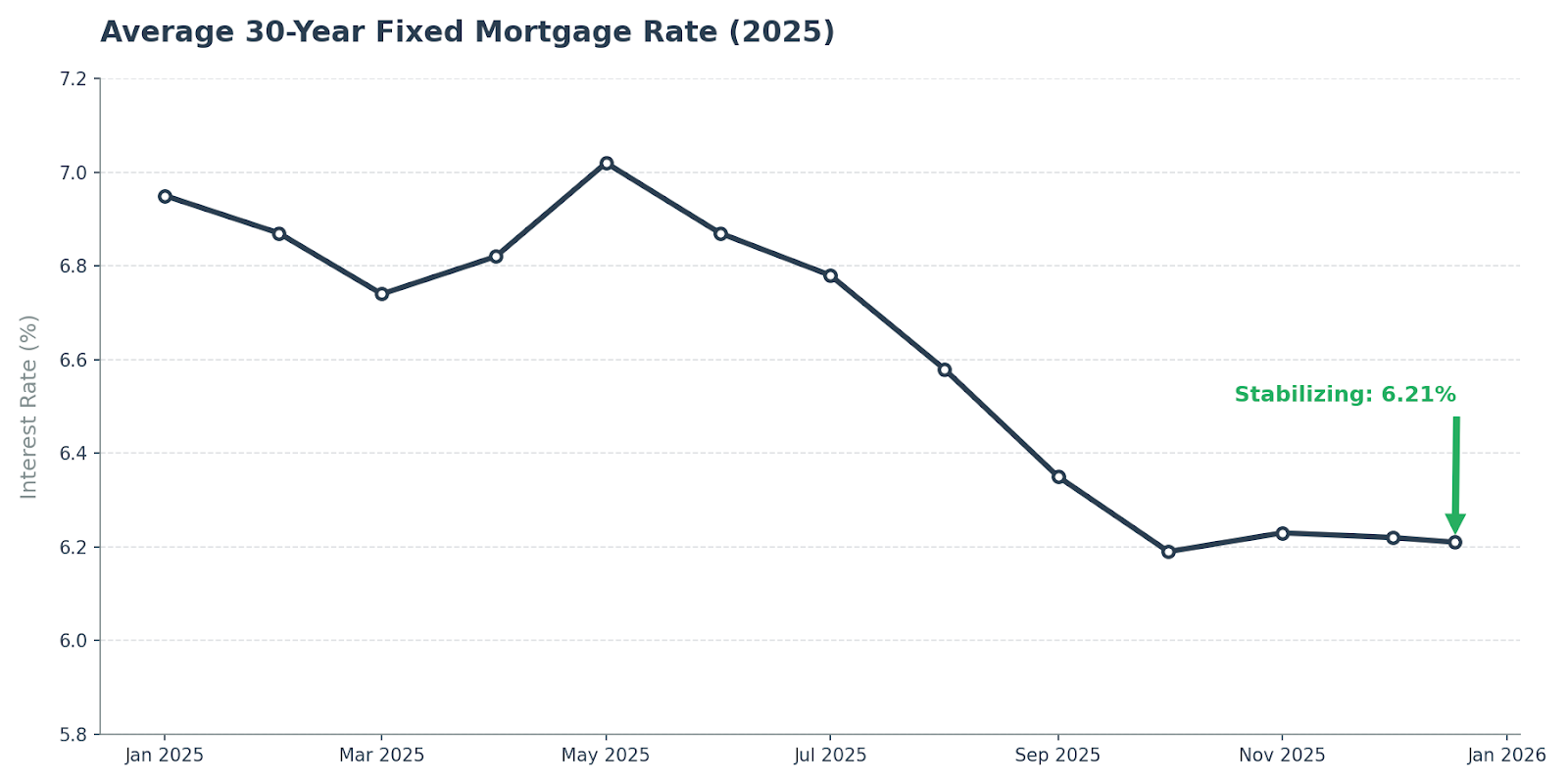
As of mid-December 2025, average 30-year fixed mortgage rates are hovering around 6.2 to 6.3 percent according to the Freddie Mac Primary Mortgage Market Survey. Rates have moved off earlier highs but have not resumed a steady downward trend.
This period of relative stability changes the conversation. Instead of chasing rate drops, buyers need to decide whether today's payment works within their long-term budget.
What Mortgage Rate Forecasts Are Saying
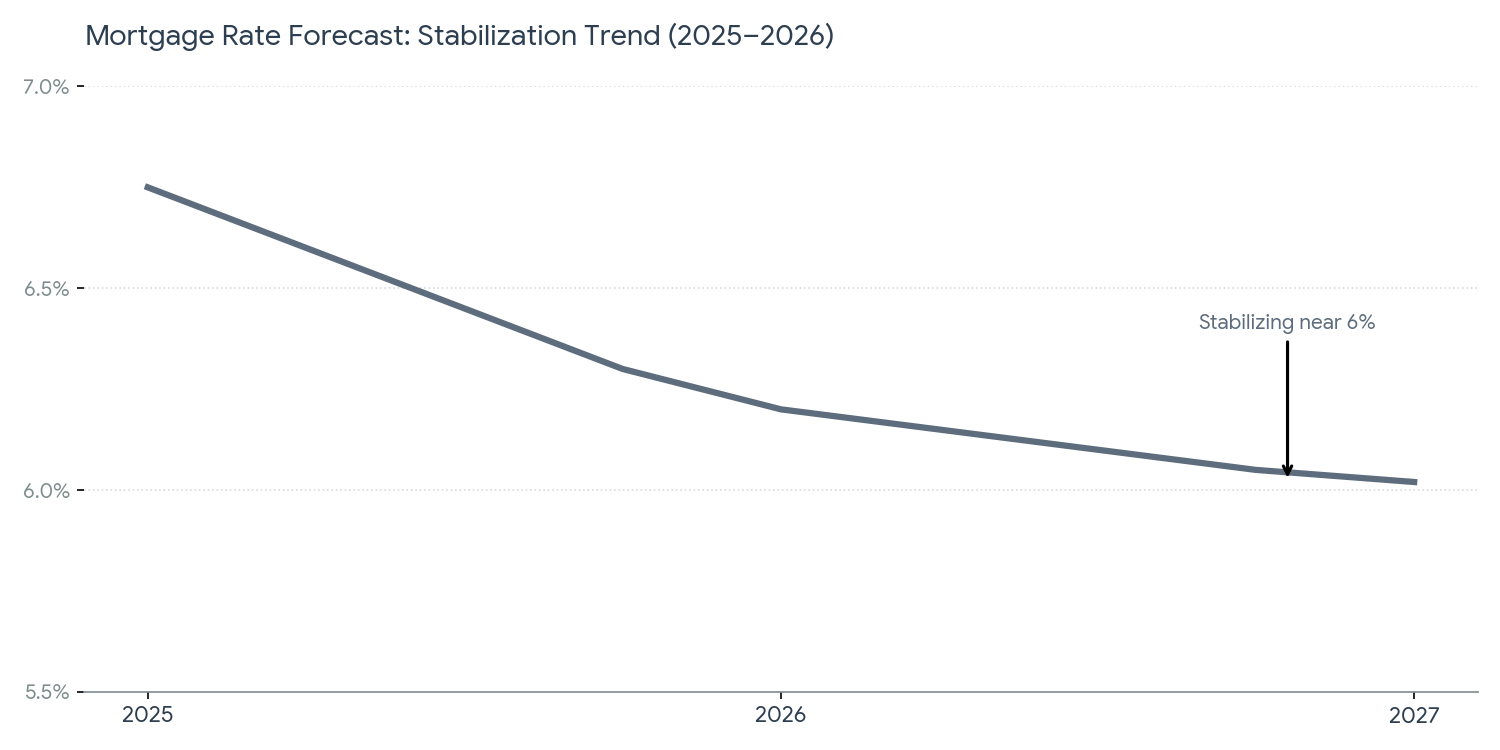
Most major housing and lending organizations, including the Mortgage Bankers Association, Fannie Mae, and the National Association of REALTORS®, expect limited movement in mortgage rates going forward.
- Rates are generally projected to remain between about 5.9 percent and 6.5 percent.
- Gradual easing is possible, rather than sharp declines.
- There is no widespread expectation of a return to historically low mortgage rates.
This means buyers waiting for dramatic drops are likely to be disappointed.
Why Federal Reserve Cuts Do Not Guarantee Lower Mortgage Rates
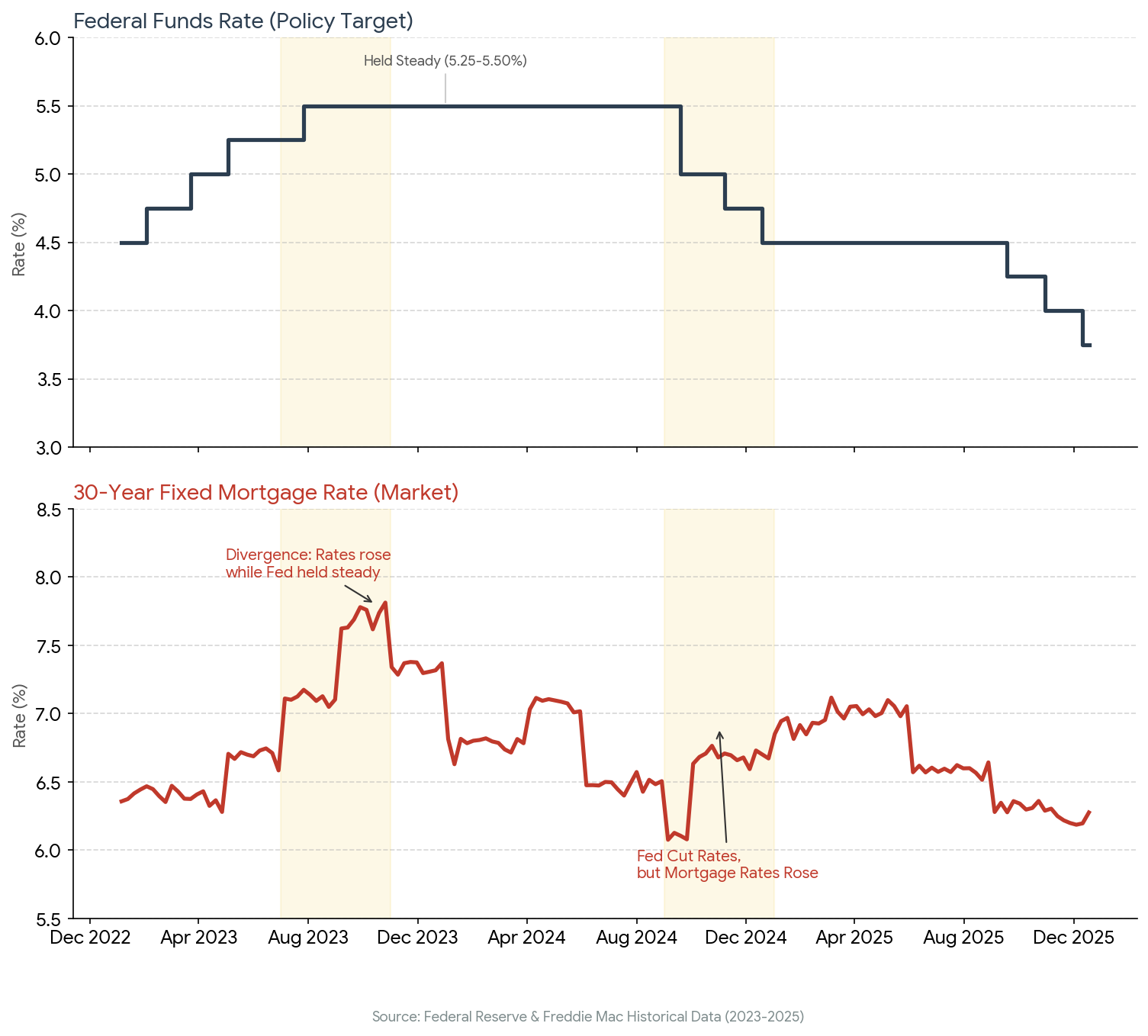
A common misconception is that mortgage rates fall automatically when the Federal Reserve cuts interest rates.
In reality, mortgage rates are influenced more by inflation expectations, the 10-year Treasury yield, and the long-term economic outlook.
Even after multiple Fed cuts in 2025, mortgage rates remained elevated because long-term bond yields stayed high. This is why buyers should not wait for a single Fed announcement to make borrowing suddenly cheaper.
Why Locking a Mortgage Rate Now Often Makes Sense
For many buyers, locking a mortgage rate now is the safer and more predictable choice.
- The upside of waiting is usually small.
- The downside of rates rising can be meaningful.
- Locking protects your monthly payment and loan approval.
- Certainty reduces stress during escrow.
For buyers near the top of their budget, even a small rate increase can affect qualification or comfort.
Local Market Conditions in Irvine and Orange County
National data only tells part of the story. Local conditions matter.
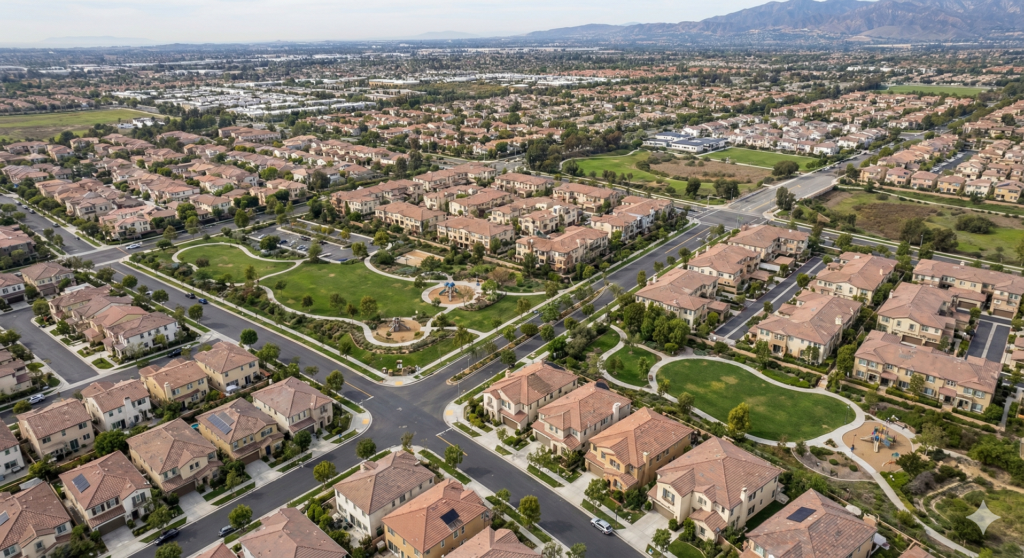
In many areas of Irvine and Orange County, housing inventory remains limited. When buyers wait, prices can rise, competition can increase, and seller flexibility can decline.
In these markets, a slight rate improvement can be offset by a higher purchase price.
When Locking Now Is Usually the Better Choice
Locking your rate now often makes sense if:
- You plan to close within 30 to 60 days.
- Today's payment fits comfortably in your budget.
- A rate increase would strain your debt-to-income ratio.
- You prefer certainty over speculation.
- You are buying in a competitive local market.
When Waiting or Floating Can Be Reasonable
Waiting may be reasonable if:
- Your timeline is six to twelve months out.
- Even a small rate improvement would materially change affordability.
- You are comfortable with the risk of rates staying flat or rising.
- Your local market conditions allow patience.
This approach requires realistic expectations and flexibility.
The Middle Ground: Lock With a Float-Down Option
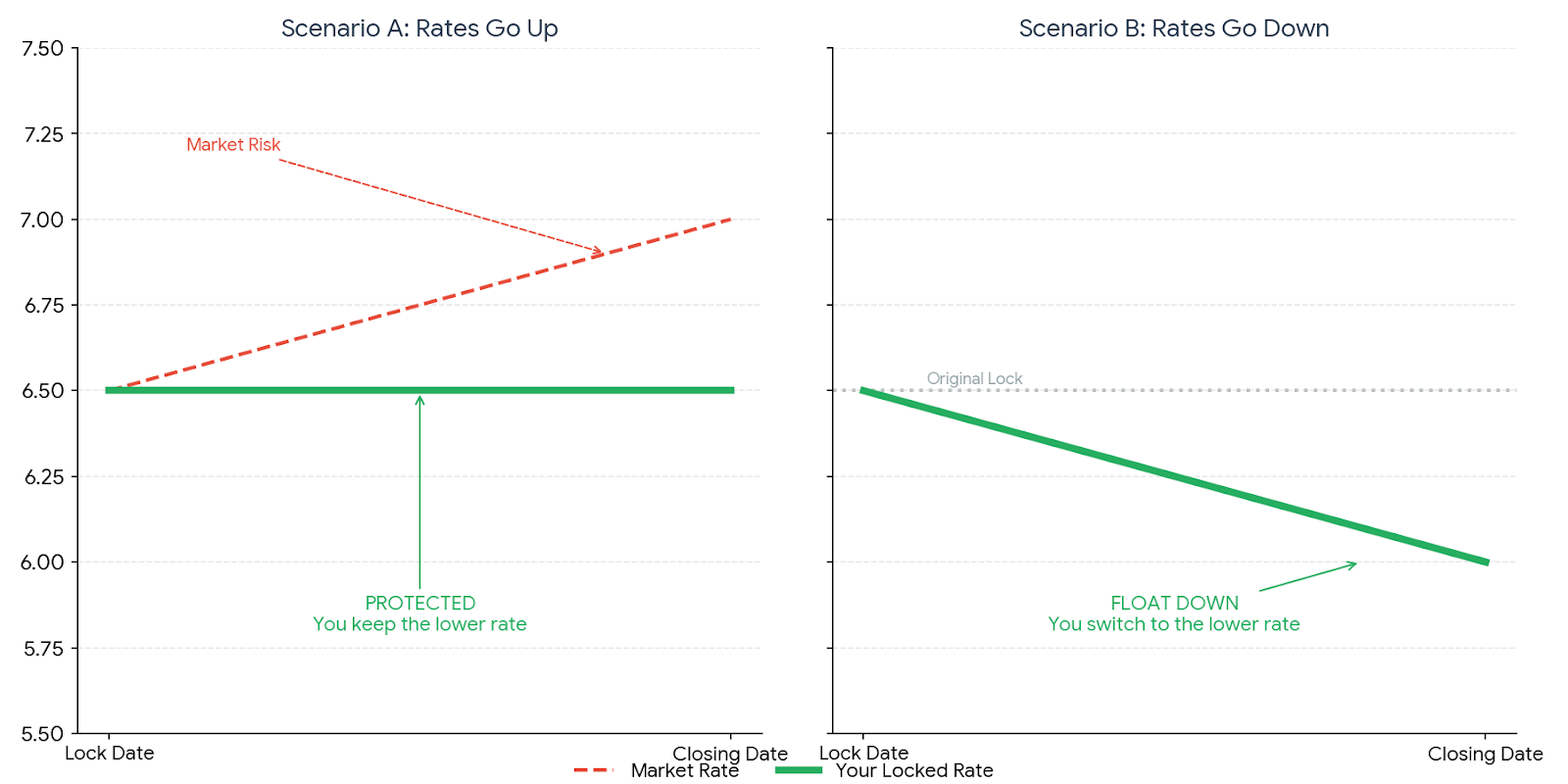
A rate lock with a float-down option allows buyers to lock today's rate to protect against increases while keeping limited upside if rates fall before closing.
Availability and cost vary by lender, so this should be discussed early in the loan process.
Mortgage Rate Lock FAQs
Is it better to lock in a mortgage rate now or wait?
For most buyers in December 2025, locking now is safer due to stable rates and limited forecasted declines.
Will mortgage rates go down in 2026?
Most forecasts expect rates to remain near 6 percent, with only modest declines possible.
Do mortgage rates follow Federal Reserve rate cuts?
No. Mortgage rates are driven more by inflation expectations and long-term Treasury yields.
Should I lock my rate if I am closing soon?
Yes. Locking helps protect your payment and loan approval from short-term volatility.
What is a mortgage rate float-down option?
It allows you to lock now and move to a lower rate if rates drop before closing, subject to lender rules.
Is waiting for lower rates risky?
Yes. Rates may rise, and in competitive markets like Irvine and Orange County, prices may increase while you wait.
Can I refinance later if rates fall?
Yes. Refinancing is typically an option if rates drop meaningfully, though costs apply.
Final Takeaway
Mortgage rates in late 2025 suggest stability rather than major opportunity.
For most buyers in Irvine and Orange County, locking in a mortgage rate now offers protection and peace of mind. If rates improve later, refinancing is an option. Stretching your budget or missing the right home is far harder to undo.
More Questions About Mortgage Rate Locks in Irvine
How long do mortgage rate locks last in California, and what does a longer lock cost?
Most California lenders offer 30, 45, 60, and 90-day rate locks. A 30-day lock is typically free or built into your rate. Extending to 60 days usually costs about 0.125 to 0.25 percent of the loan amount, and a 90-day lock can cost 0.25 to 0.50 percent. For an Irvine purchase with a $1,000,000 loan, that is roughly $1,250 to $5,000 in lender fees or rate-cost depending on lock length. Ask your loan officer for a side-by-side comparison before you choose.
Do jumbo loans for Irvine homes above the conforming limit get different rate-lock terms than conforming loans?
Yes. The 2026 FHFA conforming loan limit in Orange County is $1,209,750, and most Irvine single-family homes price above that, meaning buyers often need a jumbo loan. Jumbo rate locks may have stricter underwriting before lock, slightly different pricing, and fewer float-down programs than conforming loans. Some portfolio lenders and credit unions price jumbos competitively for Irvine, so it pays to compare two or three lenders.
What happens if my Irvine home purchase closes after my rate lock expires?
If escrow runs past your lock expiration, you typically have three options: extend the lock for a fee (usually 0.125 to 0.25 percent per 15-day extension), re-lock at the current market rate, or in some cases use a one-time float-down. Lock extensions are common in Irvine when appraisals, HOA documents, or contingency removals delay closing, so build a buffer of 7 to 14 days when you choose your lock period.
Is an adjustable-rate mortgage (ARM) worth considering for an Irvine buyer in 2026?
For some Irvine buyers, yes. A 7/6 or 10/6 ARM typically prices 0.50 to 0.75 percent below a 30-year fixed, which on a $1,000,000 jumbo can save $300 to $500 per month during the fixed period. ARMs make most sense if you plan to sell or refinance within the initial fixed window or if the lower payment is the difference between qualifying and not. Buyers who want long-term payment certainty should still favor a 30-year fixed.
How do mortgage rates affect Irvine home prices in 2026?
In Irvine, mortgage rates and home prices have an inverse but cushioned relationship. When rates fall, more buyers can qualify and prices tend to firm or rise. When rates stay flat or rise, demand softens at the margin, but tight inventory in villages like Woodbridge, Turtle Rock, and Portola Springs limits price declines. Through the first half of 2026, Irvine median prices have held within a narrow band even as rates moved between roughly 6.0 and 6.6 percent, because supply remains the dominant constraint.
Disclosure: This article is educational and reflects my experience as a licensed California REALTOR®. I am not a licensed mortgage lender, mortgage broker, or financial advisor. Mortgage rates, lock terms, float-down policies, and loan products vary by lender and change frequently. Always consult a licensed mortgage professional and review official Loan Estimates before making any rate-lock or financing decision.
Related Reading
- Irvine Real Estate Market Update: June 7, 2026
- The Woodbridge Irvine Homebuyer Guide
- The California Buyer Representation Agreement Explained
- Mastering the Escrow Process in Irvine Real Estate
- Is Now a Good Time to Sell a House in Irvine?
- The Limits of Zestimates: Why You Should Rely on an Irvine Expert