

22+ years Orange County, 400+ closed transaction sides (250+ Irvine), Top 1% of Irvine listing agents, 9th of 1,788 | 13-time Five Star Real Estate Agent, a 4.9 rating from 294 verified client reviews on Zillow
840 Newport Center Drive #100, Newport Beach, CA 92660 | +1-949-537-2079 | [email protected]
Through 2022, 2023, and into 2024, I watched the rate lock-in effect reshape Irvine inventory in real time. Homeowners with sub-3% mortgages locked in during 2020-2021 simply did not want to sell, even when life circumstances would normally push them to move. I had multiple Irvine sellers tell me some version of the same line: "I would list if I could keep my rate." That refusal to give up cheap financing kept thousands of OC homes off the market, which is the single biggest reason Irvine prices held firm while national headlines predicted a crash.
One specific example: in mid-2023 I had a Turtle Rock seller who wanted to move closer to family in San Diego County, but her 2.875% mortgage payment was lower than the rent on a comparable San Diego home. She stayed put for another full year. Multiply that by every village in Irvine - Woodbridge, Northwood, Portola Springs, University Park - and the inventory shortage was structural, not cyclical.
Irvine and Orange County home prices have not dropped because demand continues to outpace supply by a wide margin. Three structural forces drive this: a 15+ year national underbuilding deficit tracked by the US Census new residential construction series, a mortgage-rate lock-in effect keeping existing homeowners from listing, and Irvine's planned-community master association structure that limits new infill. The FHFA House Price Index has continued to show price stability or modest gains across most US metros where inventory remains tight, and Orange County is consistently among the tightest.
Are you wondering if home prices might crash? Some buyers are crossing their fingers for more affordable options, but experts agree: that's not likely to happen anytime soon. Here's why.
The Supply and Demand Puzzle
Home prices, like anything else, are driven by supply and demand. Right now, there are far more people wanting to buy a home than there are homes available. This imbalance is what's keeping prices steady - or even pushing them higher.
David Childers, President of Keeping Current Matters (KCM), explains:
"The main driving force on pricing is the limited amount of inventory in most markets across the country. That issue is not going to be solved overnight or in the next twelve months."
Why the Shortage?
For over 15 years, homebuilders haven't been building enough homes to meet demand. After the 2008 housing crisis, construction slowed dramatically and hasn't fully caught up. Even with new construction picking up recently, builders are still just trying to keep pace with today's needs, let alone recovering from years of underbuilding. National data from the US Census new residential construction series confirms the structural underbuilding gap.
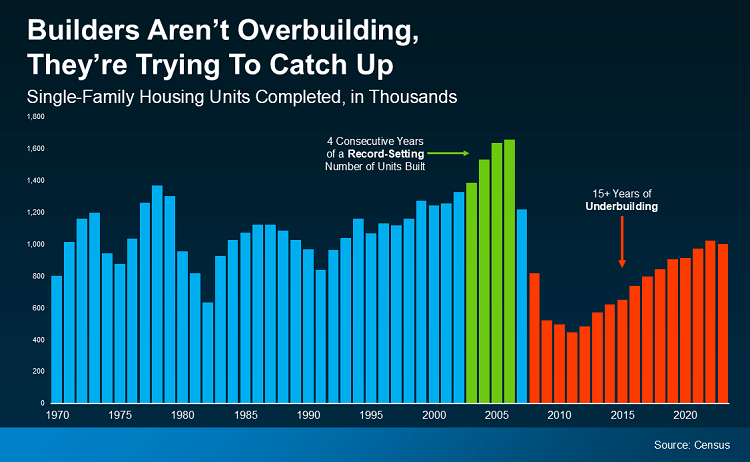
As long as we're facing a housing shortage, prices are expected to remain stable or rise in most areas. The National Association of REALTORS® existing home sales data has consistently shown that markets with the tightest inventory see the most price stability.
What About Next Year?
Most experts predict that home prices will continue to rise in 2024, but at a slower, more sustainable rate.
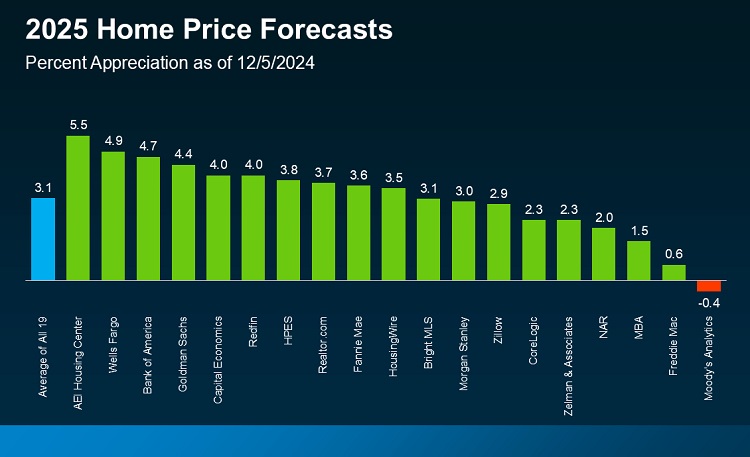
However, real estate is local. If inventory increases in a specific area, prices could level off or even dip slightly. On the flip side, in markets where inventory remains tight, prices will likely keep climbing - just like here in Orange County.
That's why it's so important to work with someone who knows the Irvine real estate market inside and out. Understanding what's happening in your neighborhood can make all the difference in your real estate decisions.
Let's Talk About Your Options
If you're curious about home prices in Irvine or anywhere in Orange County, I'd love to help you navigate our local market. Whether you're buying or selling, let's make a plan that fits your goals.
Call, text, or email me anytime, or just fill out this contact form.
Home Price FAQs: Inventory, Demand, and Why Prices Stay Firm
Why does a housing shortage push home prices up?
Home prices are a function of supply and demand. When more buyers want homes than there are homes available, sellers can hold firm on price or push higher because buyers compete for limited inventory. The opposite happens in oversupplied markets: more sellers than buyers forces price reductions. Most US metros, and Orange County in particular, have run with tight inventory for over a decade due to underbuilding tracked by the US Census new residential construction series, which is why prices have stayed firm even as mortgage rates have risen.
What is the mortgage rate lock-in effect and how does it affect Irvine inventory?
The rate lock-in effect describes how homeowners who locked in sub-3% or sub-4% mortgages in 2020-2021 are reluctant to sell because doing so means trading their cheap mortgage for a new one at current higher rates. In Irvine, where the typical homeowner is mid-career and not forced to move, this has kept thousands of homes off the market. The result is artificially tight resale inventory, which supports prices regardless of broader macro headlines.
Why is Irvine inventory consistently tighter than the national average?
Irvine is a master-planned community managed by the Irvine Company with limited remaining buildable land, strict village master association rules, and very few opportunities for infill development inside established villages like Woodbridge, Turtle Rock, Northwood, and University Park. Combined with strong job market demand from UCI, Spectrum-area employers, and OC tech, demand consistently exceeds supply across nearly every Irvine village price tier.
How does new construction affect Irvine and Orange County home prices?
New construction in Orange County is concentrated in newer Irvine villages like Great Park, Portola Springs, Orchard Hills, and Cypress Village. While builder incentives and rate buydowns at these new-construction communities can pull some demand away from resale, the pace of new supply has historically been too slow to materially impact resale prices in established villages. National new-home starts tracked by the US Census Bureau confirm the underbuilding gap is multi-year and structural, not something that resolves in a single building cycle.
Should I wait to buy in Irvine hoping prices fall?
Waiting for an Irvine price drop has historically been a losing strategy because the structural forces - tight inventory, rate lock-in, master-planned land constraints, and strong job market - have not changed. The FHFA House Price Index and NAR existing home sales data have shown that tight-inventory metros like the OC tend to see price stability or modest gains even when national headlines predict softness. The better question is usually whether your monthly payment fits your budget and your life plans, not whether you can time the bottom.