

REALTOR - Coldwell Banker Realty, Newport Beach | California DRE #01411020 | ABR, CNE, e-PRO, Smart Home Certified | RealTrends Verified (2026) | 22+ years Orange County, 400+ closed transactions (250+ Irvine), Top 1% of Irvine listing agents, 10th of 1,792 | 9,237th in the US by sales volume, RealTrends Verified 2026 | 12-time Five Star, a 4.9 rating from 293 verified client reviews on Zillow | 840 Newport Center Drive #100, Newport Beach, CA 92660 | (949) 537-2079 | [email protected]
What do I need to know before relocating to Orange County in 2026?
Orange County is a high-cost, high-demand coastal market where median home prices hover near $1.3 million and inventory, while growing, remains tight. A seamless move starts with getting clear on your commute corridor, lifestyle priorities, and budget realities before you ever tour a home or sign a lease. Renting for six to twelve months first is a legitimate strategy here, and one I recommend to many relocation clients.
Quick Answer:
Relocating to Orange County in 2026 means preparing for a $1.3 million median home price, a 40-day average time on market, and a market where 39% of homes still close over list price. The most important first steps are: pick your commute corridor before you pick a neighborhood, understand HOA rules in master-planned communities, verify school assignments by exact address (never by reputation), check wildfire-hazard zones for hillside and inland areas, and consider renting for six to twelve months if you are not certain which OC micro-market fits your life.
From the Field: A Bay Area Family That Moved to Woodbridge in 2024
A tech-industry family I represented relocated from San Jose to Woodbridge Irvine in the fall of 2024. On paper, Woodbridge and Portola Springs both looked attractive: similar price points on a per-square-foot basis, both master-planned, both feeding into strong Irvine Unified schools. What tipped the decision toward Woodbridge was three days of test-driving the commute from each community to the primary earner's downtown Santa Ana office at 8:15 AM. Woodbridge added 4 to 6 minutes each way; Portola Springs added 14 to 22 minutes each way because of the SR-133 and I-5 interchange congestion at that hour.
Over a 5-day work week, that was 100 to 220 extra minutes in the car every week - roughly 90 to 190 hours per year. The family rented in Irvine for four months first, verified the commute pattern, then bought in Woodbridge in the North Lake area. Two years in, they still tell me the four months of renting was the single most useful decision they made in the entire relocation.
The lesson: online rankings and price-per-square-foot comparisons cannot substitute for actually living a commute at real-world hours. Rent first if you are uncertain.
What the Orange County Market Looks Like Right Now
Before you can choose a neighborhood, you need an honest read on the market you're entering.
According to Redfin's Orange County housing market data, homes sold for a median price of about $1.3 million over the three months ending June 2026, up roughly 2.5% year over year, with a median price per square foot around $688 and an average of 40 days on market. Zillow's countywide data puts the average home value at roughly $1.19 million, with homes going pending in about 18 days and approximately 39% of sales closing over list price.
That gap between median days on market and median days to pending tells you something important: well-priced homes in desirable areas move fast, even as the broader market has more breathing room than it did two years ago.
Inventory has been climbing. An Orange County housing report from July 2026 noted active listings reached a new 2026 high of 5,165 homes countywide. That's more choice than buyers had in 2023 or 2024, but it doesn't mean the pressure is gone. The Orange County REALTORS / C.A.R. data from February 2026 showed a median sales-to-list-price ratio of 100%, meaning sellers are still holding the line on price in most segments.
Affordability is the honest conversation nobody wants to have. According to the California Association of REALTORS Housing Affordability Index for Q1 2026, only 16% of Orange County households could afford the county's median-priced home, which required a minimum qualifying income of approximately $350,400. That's a modest improvement from prior years but still means the vast majority of households cannot buy at the median. On mortgage rates, local market commentary for spring and early summer 2026 noted 30-year fixed rates near 6.1% in March, rising to the high-6% to low-7% range by June depending on borrower profile. Verify current rates with your lender before you plan your budget.
Choosing the Right Neighborhood for Your Life in Orange County
This is where most relocation mistakes happen. People pick a neighborhood based on a quick weekend visit or an online ranking, then discover six months later that their commute is brutal or the lifestyle doesn't fit. Here's how I walk my clients through it.
Map your daily routine first
Orange County is car-dependent. The major freeways (I-5, I-405, SR-55, SR-91, SR-73, and the SR-241/261 toll roads) define how neighborhoods connect to job centers. Before you fall in love with a zip code, test-drive your commute at actual rush hour. Use current Caltrans data or Google Maps traffic for realistic estimates, not the generic "20 minutes" you'll read on a listing description.
If you work at Irvine Spectrum or near John Wayne Airport, living in Irvine, Tustin Ranch, or Lake Forest makes practical sense. If your office is in Santa Ana or Costa Mesa, north-central neighborhoods can cut your commute significantly. If you commute to LA County, northwest Orange County cities like Fullerton, Buena Park, La Habra, or Anaheim give you better SR-91 and I-5 access than South County would.
Understand the neighborhood clusters
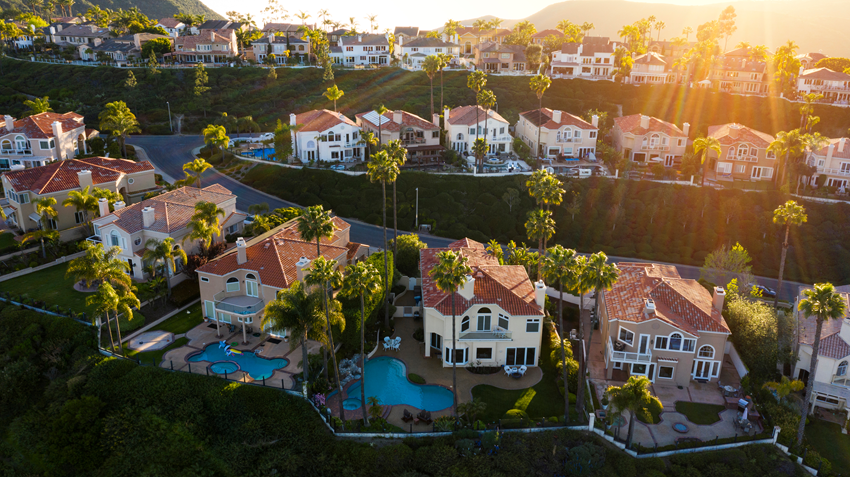
Master-planned communities like Woodbridge, Oak Creek, Turtle Rock, Woodbury, Westpark, Ladera Ranch, Rancho Santa Margarita, and Aliso Viejo tend to offer newer construction, HOA-maintained common areas, and multiple parks. They're often associated with access to well-regarded public schools within Irvine Unified, Tustin Unified, and Capistrano Unified. I know these neighborhoods at a tract level, which matters when you're trying to figure out which streets feed into which schools or which HOA has the most restrictive rules about parking and exterior modifications.
Coastal cities like Newport Beach, Laguna Beach, Huntington Beach, Dana Point, and San Clemente offer direct beach access and a lifestyle premium that comes with a price premium. Newport Beach and Laguna Beach consistently sit near the top of countywide price ranges. Beach cities often have older housing stock, and parking and traffic near the water can be genuinely challenging on weekends and during tourist season.
More accessible suburban options like Mission Viejo, Lake Forest, Orange, Placentia, Buena Park, and Anaheim offer more diverse housing types (condos, townhomes, smaller single-family homes) and can be more realistic entry points for buyers who need to stay below the countywide median. They're still expensive by most national standards, but the gap from Irvine or Newport is meaningful.
Urban cores like Downtown Santa Ana, parts of Costa Mesa, and central Anaheim have mixed-use zoning, older housing stock, and more multifamily rental inventory. These areas can be attractive for shorter commutes to central job centers, but they require closer attention to parking, street-level conditions, and city-specific rental regulations.
Verify schools by address, not by reputation
School boundaries change. I've seen buyers assume a home feeds into a particular elementary school, only to discover a recent boundary adjustment changed the assignment. Always verify the exact school assignment for a specific address directly with the district before making an offer or signing a lease. Use the California School Dashboard for state performance metrics and each district's own site for boundary maps. Irvine Unified, Newport-Mesa Unified, Capistrano Unified, and Saddleback Valley Unified all maintain searchable tools for this.
For families considering private options, schools like Mater Dei in Santa Ana, JSerra in San Juan Capistrano, and Sage Hill in Newport Coast are frequently mentioned by relocation clients. Verify enrollment, tuition, and availability on each school's own site.
Plan for HOA life
A large share of Orange County's housing stock sits inside HOA-governed communities, particularly in master-planned areas. HOAs set rules on exterior modifications, parking, noise, short-term rentals, and move-in logistics. Many communities require advance notice to the HOA or property manager for move-in dates, and some require proof of moving-company insurance. Review the CC&Rs and HOA budget documents before you commit. I always pull these for my buyers early in the process so there are no surprises.
This is also where I'd encourage you to check future development plans. A new retail center, road expansion, or multifamily project nearby can change traffic, noise, and long-term value. City planning department agendas and long-range plans are public records and worth a look for any neighborhood you're seriously considering.
Consider wildfire and coastal hazards
Some inland and hillside areas, including parts of Anaheim Hills, Yorba Linda, Lake Forest, and Rancho Santa Margarita, fall within higher wildfire-risk zones. This affects insurance requirements and required seller disclosures. Check Cal OES and local fire authority maps before committing to a hillside property. Coastal neighborhoods may face flood or erosion risks governed by the California Coastal Commission and city planning departments.
Rent First or Buy Right Away? What I Tell Relocation Clients
This is the question I get most often from people moving to Orange County from out of state or from another region of California. My honest answer: it depends on your timeline, your certainty about where you want to be, and your financial readiness.
For buyers who aren't yet sure whether they prefer coastal lifestyle or a master-planned inland community, renting for six to twelve months is genuinely useful. You'll learn your commute patterns firsthand, understand which neighborhoods feel right on a Tuesday evening versus a Saturday morning, and avoid the costly mistake of buying in the wrong area.
For buyers who are clear on their priorities and financially prepared, buying sooner makes sense in a market where prices have risen about 2.5% year over year and inventory, while improving, remains constrained. Waiting isn't automatically the safer choice.
If you do rent first, be aware that the Orange County rental market is competitive. The most recent national portal data available (from late 2025, per Realtor.com's Orange County market report) showed a median rent around $3,630 per month countywide. As of August 2026, rental conditions have continued to reflect the same supply constraints as the ownership market. Expect application screening, credit checks, and competition in desirable areas.
When you're ready to buy, pre-approval and proof of funds are effectively required in this market. The data showing 39% of sales closing over list price and a median sale-to-list ratio of 100% means you need to walk into any offer situation prepared. This is exactly the kind of preparation I work through with every relocation buyer before we start touring homes.
For a deeper look at what drives value in this market, my post on the most important factor in buying a home in Irvine and Orange County covers the decision framework I use with buyers. And if you want current neighborhood-level data on specific Irvine communities, the April 2026 Irvine market update breaks down how Woodbridge, Turtle Rock, and Northwood are moving at different speeds.
For safety research, go to primary sources: city police department crime reports (Irvine PD, Anaheim PD, Santa Ana PD) and the Orange County Sheriff's Department. Third-party crime-ranking sites vary widely in methodology and can be misleading. Official department data is the right starting point.
For property tax specifics, any rate or assessment figure should be verified directly with the Orange County Treasurer-Tax Collector or the California Board of Equalization. Property taxes in California are governed by Proposition 13 as a baseline, but local assessments, Mello-Roos bonds, and HOA dues add layers that vary significantly by community. I'll walk you through what applies to any specific property you're considering.
Frequently Asked Questions
How expensive is it to live in Orange County in 2026 compared to LA or San Diego?
Orange County is broadly comparable to coastal Los Angeles in housing costs and higher than most of San Diego. The countywide median home price was approximately $1.3 million as of mid-2026, according to Redfin, and only 16% of Orange County households could afford the median-priced home in Q1 2026 per the California Association of REALTORS Housing Affordability Index. The minimum qualifying income was roughly $350,400. Rental costs are also high, with the most recent available portal data (late 2025) showing a median rent around $3,630 per month. The tradeoff most residents cite is a combination of coastal access, employment density, and relative suburban infrastructure.
How competitive is the Orange County housing market for a first-time or relocating buyer?
It's competitive, but more balanced than it was in 2022 and 2023. As of July 2026, active inventory reached a new 2026 high of 5,165 listings countywide. That said, the median sale-to-list ratio remains at 100% and roughly 39% of homes are still selling over asking, per Zillow data. Pre-approval and proof of funds are effectively required before making any offer, and multiple-offer situations remain common in well-priced properties near job centers and top-rated school zones.
Should I rent first or buy right away when relocating to Orange County?
If you're uncertain about which neighborhood fits your commute, lifestyle, and school priorities, renting for six to twelve months is a sound strategy. Orange County has very distinct micro-markets, and a few months of living here reveals things no amount of online research can. If you're clear on your priorities and financially ready, buying sooner avoids further price appreciation and lets you start building equity. The right answer depends on your specific situation, which is worth discussing with a local agent before you decide.
Do I need a car to live in Orange County, or can I use public transit?
A car is effectively necessary for most Orange County residents. Metrolink rail and OCTA bus service exist and serve certain corridors, but the county's layout and job distribution make daily life without a personal vehicle difficult for most households. Neighborhood selection often comes down to which freeway corridor best serves your workplace, and I always encourage relocation clients to test-drive their intended commute at actual rush hour before committing to a home or lease.
What should I check for wildfire and natural hazard risk before buying in Orange County?
Some inland and hillside communities, including parts of Anaheim Hills, Yorba Linda, Lake Forest, and Rancho Santa Margarita, fall within higher wildfire-risk zones. This affects homeowner's insurance availability and required seller disclosures. Check Cal OES fire hazard severity zone maps and your local fire authority's maps before making an offer on any hillside or inland property. Coastal properties may have flood or erosion considerations governed by the California Coastal Commission and city planning departments. A thorough review of natural hazard disclosures is a standard part of the California purchase process.
Relocating to Orange County is one of the most consequential moves you can make, financially and personally. Getting the neighborhood right, understanding the market you're entering, and having a clear plan for the buy-versus-rent decision will determine whether this move feels seamless or stressful.
I've helped buyers and families navigate this exact process across Irvine, Woodbridge, Oak Creek, Turtle Rock, Woodbury, Westpark, and the broader county. If you're planning a move to Orange County and want a local perspective on which neighborhoods actually fit your life, I'd love to talk through it with you.
Schedule a free consultation and let's map out your relocation strategy together. If you're already thinking about buying, you can also get a free home valuation to understand what your current home is worth before you make the move.
Related Reading on Orange County Real Estate
- Woodbridge vs. Turtle Rock vs. Portola Springs: Which Irvine Neighborhood Is Best? - Deep dive on the three most-searched Irvine villages, side by side.
- The Woodbridge Irvine Homebuyer Guide - Everything a buyer needs to know about buying in Woodbridge specifically.
- Is It a Buyers or Sellers Market? It Depends on Where You Are - How OC micro-markets diverge from headline data.
- Should You Lock In a Mortgage Rate Now or Wait? - Framework for the timing decision every OC buyer wrestles with.
- Questions to Ask Before Hiring an Irvine Realtor - The interview questions that reveal true local expertise.
- HOA Assessments vs. Special Assessments in Irvine - Understanding the fee structure most out-of-state buyers underestimate.
Disclaimer: This article provides general information and is not legal, tax, or financial advice. Market data reflects the sources cited and conditions as of the dates noted; figures change frequently. Confirm current statistics with the cited sources and verify all rates, tax figures, school boundaries, HOA rules, and transaction details with your attorney, tax advisor, lender, escrow officer, and the relevant public agency before making decisions. Equal Housing Opportunity. Debbie Sagorin, REALTOR, California DRE #01411020, Coldwell Banker Realty.